Searchable demonstration collection
A focused demonstration of discovery across permitted archival materials.

Problems to Solutions. Solutions to Startups.
Startups to Successful Companies.
2150 connects students, professors and industry leaders to develop solutions, validate business opportunities and advance promising ventures into companies that create economic and community impact.
Archives hold cultural and commercial value that is difficult to access when materials are unstructured and rights are unclear. AI-assisted discovery paired with reliable rights records can support responsible licensing.
Cultural collections hold value that remains difficult to discover when materials are unstructured and rights are unclear.
Develop AI-assisted discovery paired with provenance, rights records and a permissions-review workflow.
Test a rights-aware archive discovery and licensing service with institutions and eligible buyers.
Advance only with usable rights records, a customer, demonstrated value and evidence of measurable impact.
How can one defined FAMU collection become searchable and usable for licensing while distinguishing archival ownership, copyright, institutional marks and individual name, image and likeness permissions?
Select one defined FAMU collection with archive staff.
Inventory and digitize permitted materials.
Capture provenance and rights status.
Test AI-assisted tagging and search.
Interview educators, media producers and licensees.
Validate a licensing workflow with rights-holder review.
Grant support enables four planned outputs across one defined collection: a foundation for customer validation, pilot testing and responsible licensing.
A focused demonstration of discovery across permitted archival materials.
A consistent record of provenance, rights status and documented permissions.
A practical review process for eligible uses and authorized licenses.
A validated customer scenario grounded in the collection and its usable rights records.
Metadata accuracy · Retrieval time · Percentage of assets with documented permissions · Qualified licensing interest
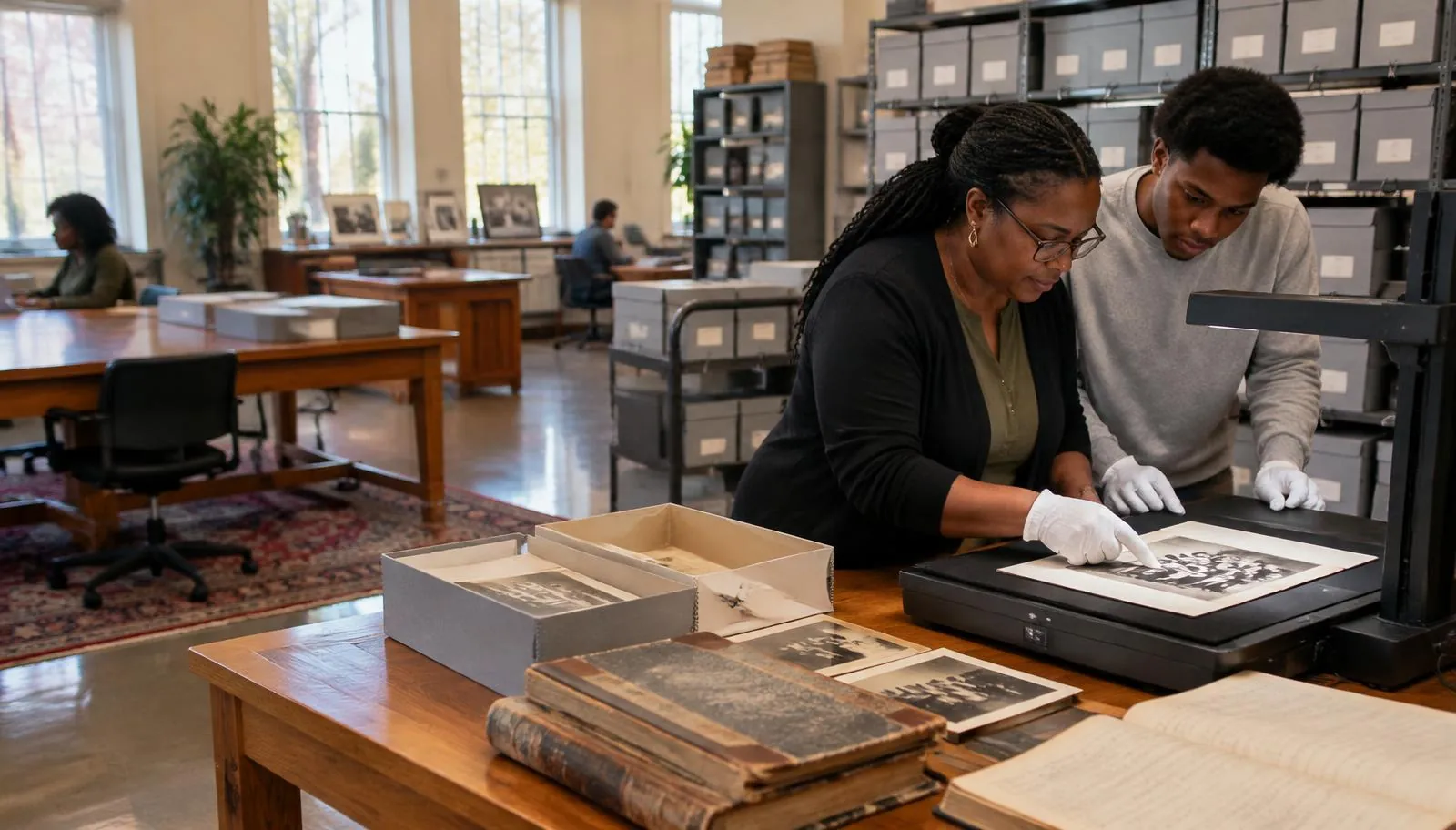
A rights-aware archive discovery and licensing operations service for universities, museums and other collections.
The pathway starts with usable rights records and a validated customer need—not an assumption that digitized materials are ready to license.
Funding enables student participation, faculty research, industry engagement, solution development, customer validation and pilot testing—supported by archival expertise, digitization, preservation and rights review. Public access to cultural history and responsible licensing of eligible assets are the benefits to pursue.
Explore Latimer.ai integration under an agreed scope. Advance only with usable rights records, an identified customer and repeatable onboarding. Test a viable revenue model, demonstrate customer value and measure preservation, discovery and economic impact before seeking investment.
Not every historical image is an NIL asset, and digitization does not create permission to license.

Support the students, professors and industry collaborators moving real problems toward practical solutions and impactful companies.
Collaboration photography: Unsplash · Stock image